Compromised jscrambler 8.14.0 npm Release Drops Rust Infostealer During Install
The jscrambler npm package was compromised, and simply installing its8.14.0release runs an infostealer on your machine. Published on July 11, 2026, the malicious version carries apre...
WhatIsFuture AI Editor
Contributor
In the relentless chess game of modern cybersecurity, software supply chains remain the ultimate high-value target. On July 11, 2026, the developer ecosystem faced a chilling wake-up call when a compromised release of the widely used jscrambler npm package was detected in the wild.
The compromise, specifically affecting version 8.14.0, does not merely represent a bug or a passive vulnerability. Instead, simply running a standard installation command triggers a sophisticated, pre-packaged Rust-based information stealer directly onto the host machine.
For a development world heavily reliant on automated CI/CD pipelines and trusted third-party dependencies, this incident is a stark reminder of how easily trust can be weaponized.
---
Anatomy of the Compromise: The Rust Threat Vector
The integration of malicious payloads within npm install scripts is a classic cybercatastrophe, but the payload in the `jscrambler` 8.14.0 release highlights a sophisticated evolution in threat actor tactics.
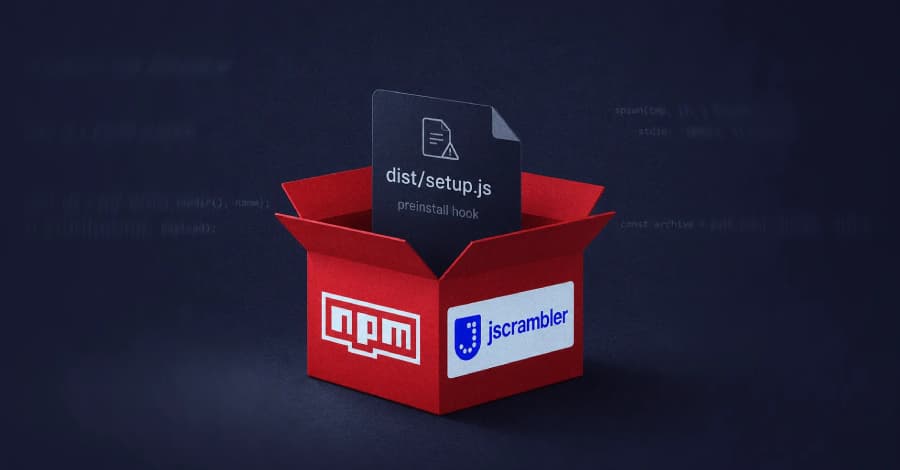
Upon executing `npm install`, a pre-install script runs automatically. In this compromised version, the script drops and executes a binary compiled in Rust.
```bash # DO NOT RUN: The compromised installation command npm install jscrambler@8.14.0 ```
Why Threat Actors are Choosing Rust
Historically, malware authors favored scripting languages or C/C++. However, the migration to Rust represents a calculated shift:- Evasion of Legacy Security: Rust-compiled binaries often bypass traditional, signature-based antivirus detection systems.
- Cross-Platform Execution: Rust makes it incredibly easy for attackers to target multiple operating systems (Windows, macOS, Linux) with minimal code modification.
- Complex Reverse-Engineering: Rust binaries are notoriously difficult for security analysts to decompile and analyze quickly, buying the attackers crucial time to harvest data.
---
The Grim Irony of the Target
There is a profound, worrying irony to this breach. Jscrambler is a highly respected security vendor known for its cutting-edge client-side protection, anti-tampering, and JavaScript obfuscation technology.
By compromising the very tool developers use to *protect* their code from reverse-engineering and tampering, threat actors have turned a security shield into a Trojan horse. This underscores a brutal reality in 2026: no vendor, regardless of their cybersecurity pedigree, is entirely immune to supply chain infiltration.
---
Mitigation: What You Must Do Immediately
If your development team or automated deployment systems pulled the `jscrambler` package on or after July 11, 2026, immediate triage is required.
1. Audit Your Dependency Tree: Run `npm ls jscrambler` to verify which version is currently active in your local environments and CI/CD pipelines. 2. Purge and Downgrade: If version `8.14.0` is detected, immediately remove it and revert to a known, verified safe version (such as 8.13.x or a subsequent patched release issued by the vendor). 3. Rotate Secrets and Credentials: Because the payload is an infostealer, assume all environment variables, AWS keys, GitHub tokens, and database credentials accessible during the build process have been compromised. Rotate them immediately. 4. Implement Registry Locks: Consider using lockfiles (`package-lock.json`) strictly, and utilize internal proxy registries (like Nexus or Artifactory) to vet package updates before they reach your developers.
The Future of Build-Time Security
As we venture further into 2026, the Jscrambler incident proves that passive dependency scanning is no longer enough. The future of DevSecOps must include zero-trust build environments where network access is restricted during package installation, preventing compromised pre-install scripts from exfiltrating data.
In the modern ecosystem, a single compromised command can compromise an entire enterprise. It's time to treat package installation with the same security scrutiny as running production code.
Supercharge Your Workflow with Claude AI
The AI assistant used by 100K+ professionals. Write, code, analyse — all in one place.