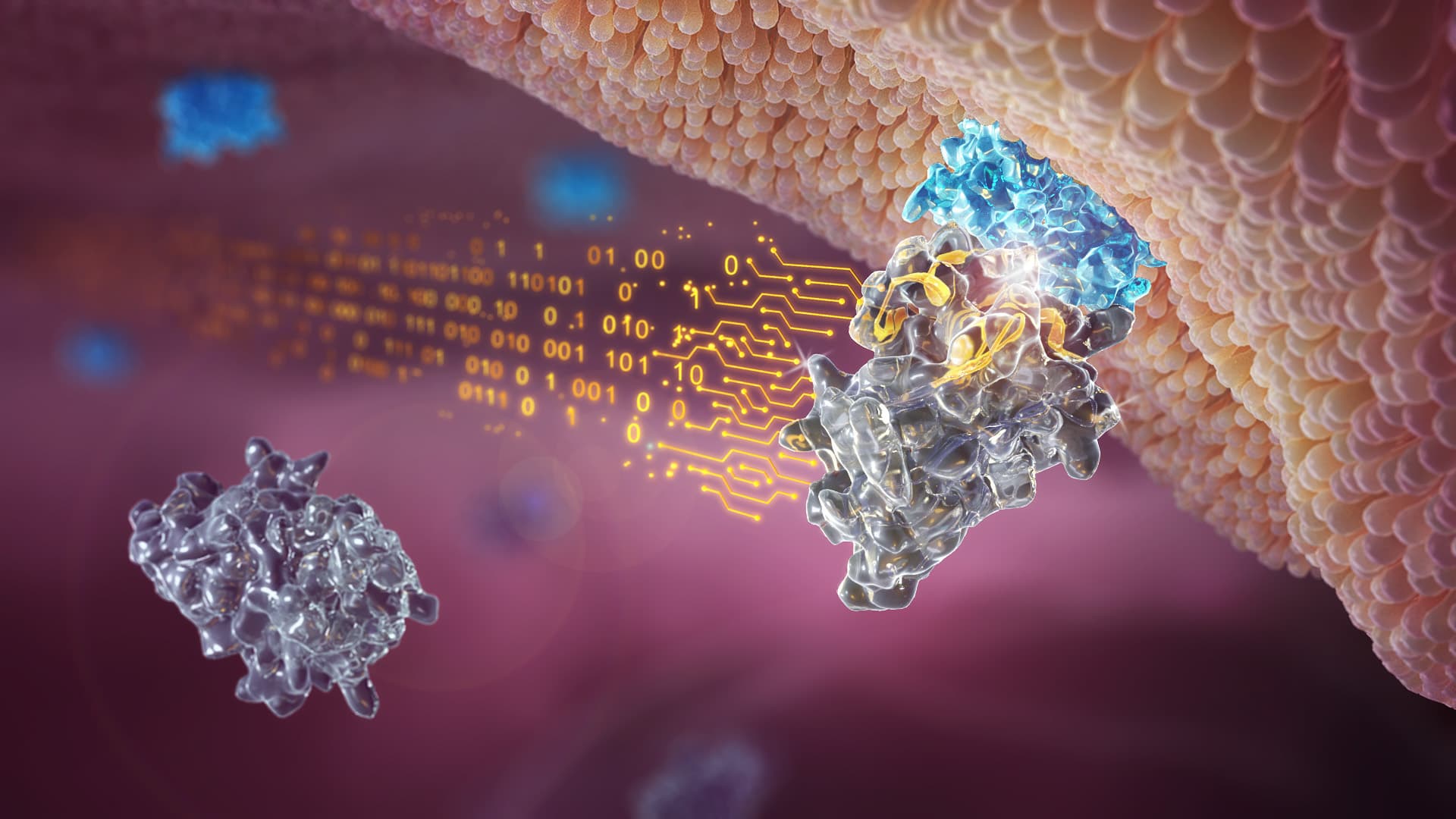
How AI helps scientists design the next generation of medicines
Designing and developing a new medicine is an expensive, failure-prone scientific challenge. A new drug can take many years to develop, at the cost of a significant investment. And even then, most pos...
WhatIsFuture AI Editor
Contributor
For decades, the biopharmaceutical industry has operated under an unforgiving mathematical reality: bringing a novel therapeutic from conceptualization to the pharmacy shelf takes upwards of a decade and costs over $2.6 billion on average, with nearly 90 percent of candidates failing somewhere in the pipeline. This grinding process of trial-and-error chemistry has left thousands of rare diseases unaddressed and turned life-saving drug development into one of the most capital-intensive, high-risk gambles in modern technology.
Enter modern artificial intelligence. By applying deep learning algorithms, generative models, and advanced structural biology platforms to the molecular universe, researchers are fundamentally reimagining how drugs are discovered. We are transitioning from a historical era of manual laboratory screening to an epoch of algorithmic drug architecture—a seismic shift that promises to slash development timelines, unlock previously "undruggable" disease targets, and herald a new era of computational biology.
Beyond Trial and Error: How Generative AI Redefines Molecular Design
Historically, finding a promising drug candidate was akin to searching for a needle in a theoretical haystack of infinite scale. Medicinal chemists relied heavily on high-throughput screening—physically testing millions of existing chemical compounds against biological targets in hopes of finding a functional reaction. Today, advanced generative AI in medicine inverts this paradigm entirely. Rather than sifting through pre-existing libraries, deep neural networks can perform de novo molecular design, inventing customized molecules engineered precisely to interact with specific cellular targets.
The core catalyst behind this transformation is the exponential advancement in machine learning models capable of predicting protein folding and 3D molecular structures. By calculating how amino acid sequences interact in three-dimensional space with atomic accuracy, computational tools afford scientists unprecedented insight into cellular mechanisms. Generative algorithms can simultaneously optimize a candidate molecule's binding affinity, structural stability, and synthetic accessibility in seconds—a task that previously required months of physical X-ray crystallography or cryo-electron microscopy experiments in the lab.
By shifting early-stage discovery into in silico environments, AI dramatically narrows the molecular search space. Pharmaceutical researchers can simulate billions of digital interactions on supercomputers, ensuring that only the most viable biological candidates move forward to physical synthesis and wet-lab validation. This drastically accelerates the hit-to-lead phase of research and development, turning a multi-year effort into a matter of weeks.
De-risking Clinical Trials Through Predictive Precision
The structural discovery of a promising compound is only half the battle; the true hurdle of pharmacology lies in safety and human biological compatibility. The vast majority of drug failures occur during late-stage clinical trials because a compound exhibits unexpected toxicity, breaks down too quickly in the liver, or fails to deliver therapeutic efficacy in living tissue. Machine learning algorithms are now stepping in to solve this multi-billion-dollar bottleneck by evaluating pharmacokinetic properties—commonly categorized as absorption, distribution, metabolism, excretion, and toxicity (ADMET)—long before a drug ever enters human subjects.
By training on vast multi-omic datasets, historical clinical trial outcomes, and cellular expression maps, predictive models can flag safety risks and adverse drug interactions early in the discovery loop. Furthermore, AI is transforming patient selection for clinical trials. By matching genetic biomarkers with targeted therapeutics, algorithms can identify patient subgroups most likely to respond positively to a treatment, drastically minimizing clinical trial dropouts and boosting success rates.
"We are moving away from brute-force wet lab screening toward predictive molecular engineering. Artificial intelligence allows us to model biological complexity in software, giving us the ability to simulate drug behaviors in human biology before we synthesize a single milligram of chemical material."
This predictive capability changes the economics of the pharmaceutical industry. By weeding out non-viable molecules early in the pipeline—a concept known in drug development as "failing fast and cheap"—biotech companies can allocate capital far more efficiently toward candidates with the highest probability of clinical success.
Key Takeaways: The Real-World Impact of Algorithmic Medicine
As artificial intelligence penetrates every layer of biological science, the practical implications for healthcare, global health equity, and technology investments are profound:
- Radical Acceleration of R&D Timelines: AI models reduce the early-stage discovery phase from 3–5 years down to mere months, dramatically reducing overall time-to-market.
- Targeting the "Undruggable": Algorithms can map complex, dynamic protein surfaces, enabling researchers to design drugs for diseases previously deemed untreatable with traditional chemistry.
- Precision and Personalized Medicine: Machine learning bridges genomics and molecular design, creating tailored therapies targeted at hyper-specific disease mutations.
- Capital Efficiency in Biotechnology: Decreased failure rates in late-stage clinical trials significantly lower the cost burden of drug development, potentially reducing final medication prices for consumers.
- The Emergence of Autonomous Labs: The convergence of generative AI with robotic wet labs creates automated closed-loop systems that design, synthesize, and test molecules in real time with minimal human intervention.
The Bottlenecks: Data Quality, Wet Labs, and Regulatory Hurdles
Despite these monumental leaps forward, AI drug discovery is not an effortless silver bullet. The fundamental limitation facing any machine learning model is the quality and availability of its training data. Biological systems are notoriously complex, non-linear, and noisy. Much of the world's existing biomedical data remains proprietary, unstandardized, or incomplete, making it challenging to train AI models that reliably generalize across novel biological pathways.
Moreover, virtual success must still be verified in physical reality. Computational predictions require extensive validation in robotic wet labs, cellular assays, and animal models. The bottleneck of drug development is therefore shifting from designing molecules to rapidly synthesizing and validating them in the physical world.
Finally, regulatory frameworks must adapt to this technological shift. Global regulatory bodies like the U.S. Food and Drug Administration (FDA) and the European Medicines Agency (EMA) face the challenge of evaluating drugs designed by complex, deep-learning "black box" algorithms. Establishing transparent validation standards for AI-generated candidates will be crucial to maintaining rigorous safety standards while encouraging rapid medical innovation.
The Bottom Line
Artificial intelligence is far more than an incremental optimization tool for pharmaceutical companies; it represents a foundational transformation in how humanity understands and treats disease. As deep learning algorithms continue to advance alongside wet-lab automation and genomic sequencing, the traditional boundaries of drug development are dissolving. By converting the unpredictable art of molecular discovery into an exact, computational science, AI is paving the way for targeted, accessible, and life-saving therapeutics that will redefine the future of global medicine.
Supercharge Your Workflow with Claude AI
The AI assistant used by 100K+ professionals. Write, code, analyse — all in one place.


