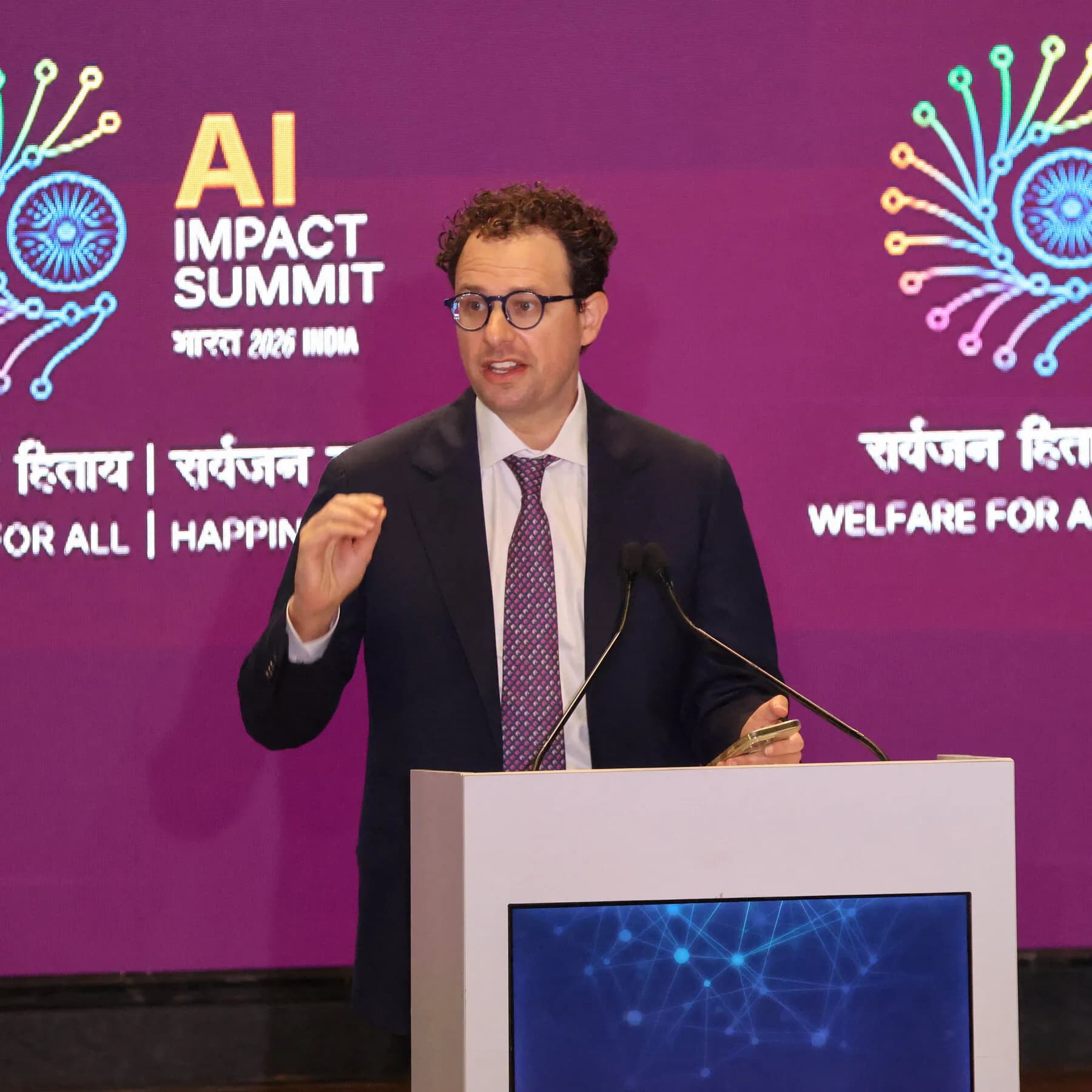
Anthropic C.E.O. Dario Amodei Calls for A.I. Slowdown
Anthropic CEO Dario Amodei calls for a frontier AI slowdown, warning that rapid artificial intelligence capabilities require stronger industry safety controls.
Researched and edited by Kiran Ch and the WhatIsFuture editorial team. Reviewed for factual accuracy before publication.
In a detailed essay that has sent shockwaves across Silicon Valley and global technology policy circles, Anthropic Chief Executive Officer Dario Amodei has publicly called for a coordinated, industry-wide slowdown in the development and deployment of frontier artificial intelligence models. Reporting from NYT Tech confirms that Amodei’s essay lays out an unvarnished assessment of rapidly accelerating AI capabilities, warning that capability scaling is severely outstripping the industry's technical capacity to engineer robust safety, alignment, and security controls. The intervention marks a dramatic escalation in the ongoing battle over AI governance, coming from the leader of one of the world's most valuable and technically advanced frontier labs.
Amodei's call for operational restraint is not merely a philosophical warning; it represents a strategic challenge to the prevailing tech playbook of relentless, unconstrained deployment. As training clusters scale toward gigawatt-class data centers and frontier architectures demonstrate increasingly sophisticated multi-step reasoning, autonomous tool execution, and cyber-capability, the risk profile of state-of-the-art models has transformed. By advocating for binding capability thresholds, standardized evaluation pauses, and regulatory oversight across the entire frontier landscape, Anthropic is forcing an urgent industry-wide reckoning: whether the pursuit of artificial general intelligence can safely proceed without explicit, globally enforced speed limits.
Join Our Tech Community
Get instant alerts on the most critical AI breakthroughs on our WhatsApp channel. No spam, just signal.
Key Takeaways
- Proposal for Enforceable Safety Triggers: Amodei argues that frontier AI developers must commit to binding deployment pauses when models reach predefined capability thresholds, unless rigorous safety, interpretability, and alignment criteria are verifiably satisfied.
- The Growing Capability-Safety Gap: Hardware scaling and algorithmic optimizations continue to outpace technical alignment research, leaving high-capability models vulnerable to jailbreaks, unexpected emergent behaviors, and potential misuse in cyber and biological domains.
- Split in Frontier AI Strategy: The proposal creates a sharp divide between labs advocating for aggressive commercial velocity and those prioritizing governed, safety-first scaling, directly impacting upcoming regulatory frameworks across North America and Europe.
- Operational Implications for Enterprise Tech: Enterprise engineering leaders must prepare for stricter model auditing standards, potentially extended release cycles for next-generation foundation models, and heightened compliance requirements surrounding agentic deployments.
What Happened?
The release of Dario Amodei’s essay through NYT Tech represents one of the most explicit admissions by a top-tier AI executive that current industry trajectories carry unmanageable systemic risks. Amodei, who previously co-founded Anthropic alongside former OpenAI researchers to build a dedicated safety-focused laboratory, articulated a stark framework: without deliberate structural pauses, the competitive pressures of the marketplace will inevitably compel companies to release models whose risk profiles exceed human oversight capabilities.
This public stance builds directly upon internal frameworks Anthropic has developed over recent years. As documented in our earlier analysis of how the Anthropic CEO outlines plan to slow AI development, the company established its Responsible Scaling Policy (RSP) to tie model compute allocation and deployment clearance to specific Anthropic Safety Levels (ASL). However, Amodei’s latest piece makes it clear that voluntary, single-company policies are insufficient in a multi-polar competitive market. Without industry-wide adoption and regulatory backing, self-imposed safety throttles simply expose safety-conscious labs to market share erosion by less cautious competitors.
The timing of Amodei’s manifesto coincides with massive capital infusions into AI infrastructure. Cloud hyperscalers and venture funds are committing hundreds of billions of dollars to build training runs operating at unprecedented compute densities. In this environment, Amodei’s assertion that the industry needs to step back and validate control mechanisms before crossing critical compute and capability thresholds has drawn intense debate. While safety advocates and university researchers have lauded the move, market rivals and open-source proponents have reacted with skepticism, questioning whether such calls act as defensive posturing or regulatory capture.
Furthermore, the essay explicitly connects model capability growth to geopolitical and economic vulnerabilities. Amodei noted that as foundation models gain the ability to autonomously write software, orchestrate complex network interactions, and synthesize technical knowledge, the potential for unintended catastrophic outcomes—or intentional exploitation by bad actors—increases non-linearly. The essay demands that the global technology sector treat frontier model deployment with the same technical rigor and precautionary containment protocols applied to nuclear energy or aerospace engineering.
The Technology Behind It
To understand Amodei’s call for a slowdown, one must look at the underlying mechanics of modern frontier training runs. State-of-the-art model development relies on scaling laws, where model capacity scales predictably with floating-point operations (FLOPs), dataset token counts, and parameter scale. When compute allocation moves beyond $10^{26}$ total FLOPs, models begin exhibiting emergent capabilities—abilities that were not explicitly trained into the system, such as multi-step autonomous logic, zero-day software exploit identification, and advanced persuasion dynamics.
"Capability scaling continues to advance on a smooth, predictable trajectory driven by compute and algorithmic refinements. Alignment scaling, conversely, remains an experimental science reliant on heuristics, human feedback loops, and incomplete interpretability tooling."
The core technical dilemma identified by Amodei is the fundamental asymmetry between capability engineering and alignment engineering. Capability scaling continues to advance on a smooth, predictable trajectory driven by hardware performance gains, high-bandwidth memory (HBM3e/HBM4) architectures, and ultra-fast optical interconnects. Alignment scaling, conversely, remains an experimental science reliant on heuristics, Reinforcement Learning from Human Feedback (RLHF), Reinforcement Learning from AI Feedback (RLAIF), and incomplete interpretability tooling such as dictionary learning and sparse autoencoders.
Modern alignment techniques essentially act as fine-tuned control layers placed on top of massive, opaque statistical networks. Under stress testing, adversarial prompting, or extreme out-of-distribution inputs, these safety layers can break down. As foundation models are integrated into autonomous agentic workflows—where they are granted broad execution privileges, database access, and code evaluation rights—a failure in alignment is no longer just an inappropriate text generation; it becomes an unauthorized system execution or data exfiltration event.
The technical risk is further exacerbated by model distillation and weight extraction techniques. When state-of-the-art weights are deployed via APIs, aggressive actor networks can query these endpoints to extract frontier intelligence into unmonitored local models. We saw the real-world operational reality of these techniques when Anthropic revealed seven China-based AI labs ran industrial-scale Claude distillation attacks. This demonstrated that capability deployment without absolute security controls leads to rapid, unauthorized capability proliferation across non-regulated environments.
Why It Matters & Industry Impact
Amodei's call for a safety slowdown has immediate structural implications across four key segments of the tech ecosystem: developers, enterprise technology leaders, early-stage startups, and capital markets.
For software engineers and AI researchers, the focus of system design must inevitably shift from raw capability integration to deterministic containment architecture. If frontier labs institute capability pauses or enforce strict API access controls, engineering teams will need to invest heavily in self-hosted, domain-specific open-weights models and robust application-layer security mechanisms. System design will require non-probabilistic guardrails, strict least-privilege runtime environments for autonomous agents, and continuous runtime evaluation systems.
For enterprise executives, the message introduces a crucial element of operational planning: the era of frictionless, exponentially faster model drops may be interrupted by mandatory safety compliance phases. Chief Information Officers and Chief Technology Officers must architect their enterprise software pipelines to be model-agnostic. Relying on continuous, unchecked leaps in underlying model capabilities to solve core application bugs is no longer a viable engineering strategy. Organizations will need to double down on internal fine-tuning, retrieval-augmented generation (RAG), and deterministic logic boundaries.
For startups and venture capital investors, Amodei’s stance reshapes the risk profiles of AI-native companies. If regulatory bodies adopt Amodei’s recommendations, pre-deployment safety compliance will become a major expense item, raising the capital requirements for training new foundational models. This dynamic could accelerate capital consolidation toward established hyperscalers while simultaneously creating opportunities for specialized safety auditing, interpretability, and compliance startups. Furthermore, private market valuations for lab-scale entities face strategic recalibration as exit timelines and commercialization pathways navigate tighter regulatory scrutiny—a dynamic underscored as OpenAI’s Sam Altman said it would be ill-advised to go public in 2026 amid volatile regulatory and technical landscapes.
What Experts & Sources Say
The tech industry's reaction to Amodei’s publication has been fast, polarized, and technically nuanced. The debate splits largely along lines of safety governance, open-source philosophy, and economic competition.
Leading academic alignment researchers have voiced strong support for Amodei's position, noting that the AI industry has operated for too long without explicit safety thresholds. Computer science researchers at institutions like Stanford HAI and UC Berkeley's Center for Human-Compatible AI have emphasized that Amodei’s proposal grounds safety not in sci-fi tropes, but in empirical technical evaluations. They argue that requiring empirical verification of model safety before granting deployment authorization is standard practice in every other high-consequence industry, from medicine to civil aviation.
Conversely, prominent figures in the open-source AI community and competing commercial labs have expressed strong skepticism. Critics contend that formal slowdown mandates favor wealthy incumbents who already possess frontier-grade models, effectively locking in their competitive advantage. Open-source advocates argue that restricting the training and distribution of large models concentrated power in a handful of corporate hands, limiting public oversight and stifling open science. They argue that transparency and decentralized red-teaming, rather than corporate pauses, provide the most resilient path toward long-term system safety.
Policymakers and national security officials in Washington, London, and Brussels are reviewing Amodei's essay as a potential policy blueprint. Sources within regulatory bodies indicate that Amodei's explicit framework provides tangible parameters—such as training FLOP thresholds and verifiable safety benchmarks—that can be translated into statutory reporting requirements. However, national security analysts caution that any unilateral Western slowdown must be carefully balanced against international competitive dynamics, ensuring that safety protocols do not compromise technological leadership.
What Happens Next?
Over the next 6 to 12 months, the practical impact of Amodei’s essay will unfold across regulatory bodies, compute supply chains, and industry consortia. We anticipate three primary operational shifts:
First, expect a rapid acceleration of standardized evaluation frameworks. Industry bodies like the U.S. and U.K. AI Safety Institutes will likely adopt formalized testing harnesses based on Anthropic’s Responsible Scaling Policies. Frontier labs will be under intense public and regulatory pressure to publish independent, third-party red-teaming reports before releasing models that cross computational milestones.
Second, compute monitoring will move from concept to implementation. Cloud providers operating large GPU and TPU clusters will face increased regulatory demands to track massive training runs. Telemetry tracking compute utilization, inter-node communication bandwidth, and cluster sizes will likely become a primary mechanism for enforcing safety thresholds, ensuring that undisclosed, super-scale models are not trained without mandatory compliance checks.
Third, frontier model release cadences will likely lengthen. Rather than releasing major architectural leaps every few months, top-tier labs will allocate significantly larger portions of their compute budgets to post-training alignment, mechanistic interpretability mapping, and red-teaming evaluations. This shift will give the broader software ecosystem critical breathing room to mature enterprise integration patterns and security architectures.
Bigger Picture
Dario Amodei’s call for an AI slowdown highlights a fundamental transition point in the history of computing. For decades, computer science operated under the assumption that faster, larger, and more capable software systems were inherently beneficial, with security and safety handled retroactively via patches and updates. Frontier AI has permanently broke that paradigm; when software systems acquire high levels of autonomy and generalized capability, post-hoc patching is insufficient to prevent systemic failures.
This debate also touches the deep geopolitical realities of the 21st-century compute supply chain. The physical infrastructure underpinning AI—advanced photolithography machines, extreme-purity silicon wafers, packaging facilities, and high-density power grids—is inherently scarce and geographically concentrated. Controlling the pace of AI development is not just a software debate; it is an infrastructure governance question that impacts global energy grids, semiconductor trade policies, and nation-state industrial strategies.
Ultimately, the industry’s response to Amodei’s manifesto will define the structural parameters of the tech economy for decades. If the industry successfully implements synchronized, verifiably safe scaling frameworks, artificial intelligence will likely mature into a stable, highly reliable foundational platform for global industry. If competitive pressures trigger a race to the bottom, bypassing safety controls in pursuit of raw benchmark performance, the tech sector risks systemic outages, severe regulatory crackdowns, and unmanageable security crises that could halt technological progress far more abruptly than any voluntary pause ever would.
Frequently Asked Questions
What specific mechanisms does Dario Amodei propose for enforcing an AI slowdown?
Dario Amodei advocates for binding, capability-based safety triggers tied to training compute metrics (measured in FLOPs) and empirical evaluation benchmarks. Under this framework, if a planned training run exceeds specific computational thresholds or if a model demonstrates capabilities in sensitive domains—such as autonomous cyber exploitation or biological design—the developer must pause deployment until independent safety evaluations prove the system can be reliably aligned and controlled.
How would a voluntary or regulated slowdown impact open-source AI development?
A regulated slowdown creates a complex dynamic for open-source AI. While open-weight models below high compute thresholds would likely remain unaffected, open-source models reaching frontier-scale capabilities could face strict compliance, red-teaming, and safety verification requirements prior to public weight distribution. Critics argue this could raise financial and legal barriers for independent developers, while proponents argue safety checks are essential regardless of deployment model.
Will an AI safety slowdown put Western companies at a disadvantage against foreign competitors?
This is a central point of debate among tech executives and national security analysts. Amodei and safety proponents argue that prioritizing control and reliability actually enhances long-term national security by preventing catastrophic system failures and unauthorized code exfiltration. However, opponent strategies emphasize that Western safety throttles must be paired with international diplomatic frameworks and hardware-level chip export controls to prevent non-compliant state actors from gaining a decisive technological advantage.
This analysis was inspired by a story originally reported by NYT Tech. Read the original report →
Supercharge Your Workflow with Claude AI
The AI assistant used by professionals worldwide. Write, code, analyse — all in one place.