GitLab CVSS 10 File-Read Flaw Draws In-the-Wild Probes After Disclosure
GitLab has released patches to address multiple flaws, including a maximum-severity security vulnerability that has witnessed in-the-wild probes within hours of public disclosure. The vulnerability in...
Researched and edited by Kiran Ch and the WhatIsFuture editorial team. Reviewed for factual accuracy before publication.
GitLab CVSS 10 File-Read Flaw Draws In-the-Wild Probes After Disclosure
If there is one notification that keeps engineering managers up at 3:00 AM sweating through their bedsheets, it is a CVSS 10.0 rating sitting on your primary source code management server. Recent reporting from security researchers highlighted a chilling reality: GitLab pushed out emergency security patches for a maximum-severity file-read vulnerability, and within hours of public disclosure, threat actors were actively probing unpatched instances across the global internet.
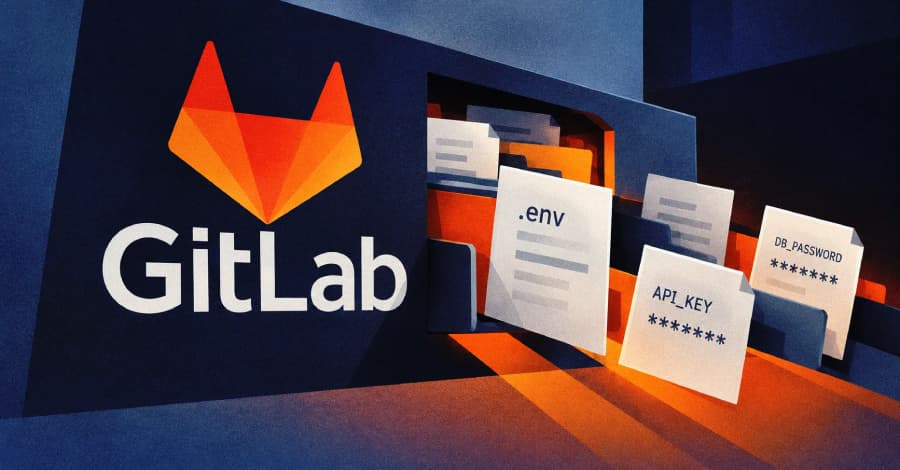
Let's cut straight through the corporate-speak and PR spin. This isn't just another routine bug to tuck away in your weekly sprint backlog. When a CVSS 10.0 arbitrary file-read flaw lands on a developer platform like GitLab, it isn't just source code at risk—it is your entire corporate kingdom. API tokens, production database credentials, CI/CD signing certificates, and private repositories are instantly exposed to anyone with a basic curl script and a free afternoon.
Join Our Tech Community
Get instant alerts on the most critical AI breakthroughs on our WhatsApp channel. No spam, just signal.
Key Takeaways
- Maximum Severity Reality: A CVSS 10.0 score indicates trivial exploitability that requires zero user authentication, making unpatched instances immediate targets for automated takeover.
- The Exploit Window Has Vanished: Threat actors now use automated patch-diffing tools to build working exploits within hours of security announcements, rendering traditional monthly or weekly patch cycles obsolete.
- Secrets Leakage Is the Real Threat: The primary danger of an arbitrary file-read vulnerability isn't just code theft; it is the extraction of secrets, environment variables, and session-signing keys that grant full persistent network access.
- Self-Hosted Isolation Is Mandatory: Organizations running self-hosted developer tools must enforce zero-trust network boundaries, strict web application firewall (WAF) filtering, and automated emergency patching routines.
The Anatomy of a CVSS 10.0: How File-Read Vulnerabilities Escalation Works
To understand why this GitLab flaw sent shockwaves through the DevSecOps community, you have to look under the hood at how modern web platforms handle system calls. An arbitrary file-read vulnerability allows an unauthorized remote attacker to bypass application-level directory boundaries and request system files directly from the host operating system. In simple terms, the web server is tricked into opening up its internal filing cabinet and handing confidential documents over the public web.
The Path of Least Resistance: Path Traversal
In many web applications, file-read flaws stem from improper input sanitization in endpoints that handle file downloads, profile pictures, attachment imports, or repository exports. If the application uses user-supplied parameters to construct a file path on the server without strict validation, attackers can insert path traversal sequences (such as ../../../../). This tricks the file-system API into traversing backward out of the designated public directory and into the sensitive root directories of the host operating system.
The Escalation Vector: From File Read to Remote Code Execution (RCE)
The true danger lies in escalation pathways. Attackers rarely stop at reading harmless system configuration files. In a typical GitLab deployment, the target list for an attacker exploiting an arbitrary file-read is highly strategic:
/etc/passwd: While modern Linux systems store password hashes in/etc/shadow, the passwd file remains highly valuable for mapping out valid system users, service accounts, and system shells.config/database.yml: This file contains the credentials for the database back-end. With direct database access, an attacker can modify user records, elevate their permissions to administrative levels, or dump table data.config/secrets.ymlorcredentials.yml.enc: This is the holy grail of a Ruby on Rails application. These files contain thesecret_key_base. If an attacker can read this key, they can forge session cookies. By craftily constructing a serialized session cookie signed with the legitimatesecret_key_base, the attacker can achieve instant, unauthenticated Remote Code Execution (RCE) via object deserialization.- Environment Variables (via
/proc/self/environ): On modern containerized deployments (like Docker or Kubernetes), reading the environment file of the running process exposes system variables, cloud provider metadata tokens, third-party API keys, and temporary security credentials.
Once an attacker extracts these keys, they can bypass multi-factor authentication (MFA), forge administrative session cookies, impersonate high-privilege users, or interact directly with underlying databases without ever triggering standard login alerts. From there, lateral movement is devastating. Armed with forged credentials or stolen CI/CD pipeline tokens, an attacker can modify production code, inject malicious dependencies into building artifacts, or hijack cloud infrastructure resources. What begins as a simple file-read flaw rapidly spirals into a full-scale corporate compromise.
The Zero-Day Horizon: The Bot-Driven Exploit Economy
We need to talk about the terrifying speed at which the modern threat landscape operates. The moment a security vendor or open-source maintainer publishes a patch, the clock starts ticking. Threat groups run automated patch-diffing tools against the code repository or binary releases to compare the vulnerable code against the patched version.
By conducting a semantic analysis of the changes—often identifying where input validation was added or where string processing was tightened—threat actors can isolate the exact logic error that was fixed and construct a working proof-of-concept (PoC) payload within thirty minutes to an hour of the patch's release.
This rapid turnaround explains why in-the-wild probes started hitting GitLab instances almost immediately after disclosure. Malicious botnets don't sleep, and they don't wait for business hours. They blast millions of requests across IPv4 and IPv6 address spaces searching for vulnerable endpoints. If your server is reachable over the open internet, it will be scanned within moments of a public exploit going live. We live in an era where automated traffic dominates the web, and in cyber defense, automated scanning scripts will beat human security teams every single time if manual intervention is required.
To illustrate the speed and volume of modern automated threats, look at how the wider web has changed. In other digital spaces, bot-driven automated traffic dominates platforms, manipulating metrics and draining budgets. The same automated efficiency is applied to cyber warfare. The exploitation pipeline is fully industrialized, utilizing distributed command-and-control (C2) servers to orchestrate global scans. Relying on traditional patch management processes—where a security team reviews a vulnerability on Monday, tests it in staging on Wednesday, and deploys it to production the following Sunday—is pure suicide. If your window to patch is measured in days while the attacker's window to exploit is measured in minutes, you have already lost the battle.
DevSecOps Illusion: Why Source Code Repositories Are Ultimate Supply Chain Targets
Over the past decade, the tech industry pushed hard toward unifying the software development lifecycle into single-pane-of-glass platforms like GitLab and GitHub. While this unified approach works wonders for developer velocity, it creates an enormous single point of failure. Your code repository server isn't just holding source code; it acts as the centralized command-and-control node for your entire digital infrastructure.
Consider what lives inside a modern GitLab server: deployment scripts, cloud provider credentials, third-party integration keys, private package registries, and sensitive intellectual property. Whether you are building standard enterprise web applications or deploying complex, cutting-edge AI software and open-weight code repos and infrastructure, access to the repository means access to the core engine of your software supply chain.
The Cascade of a Supply Chain Compromise
If an attacker gains administrative access to GitLab, the potential down-river consequences are catastrophic:
- Poisoning the CI/CD Pipeline: Attackers can modify the
.gitlab-ci.ymlfiles of critical projects to inject malicious code during the build stage. Because this injection happens in memory during compiling or packaging, the compromised source code on the main branch may look clean, while the compiled binary or container image deployed to production contains a backdoor. - Stolen CI/CD Runner Tokens: GitLab CI/CD runners often have elevated roles within AWS, Azure, or Google Cloud Platform to facilitate automated deployments. By stealing these runner registration tokens or hijacking the runner environments, attackers can escape the repository host and pivot directly into production cloud environments.
- Dependency Hijacking: Many organizations host private package registries (e.g., npm, NuGet, PyPI) within GitLab. By compromising these registries, an attacker can publish malicious updates to internal library dependencies, ensuring that every internal developer and automated system downloads the malware during their next local build.
"If an attacker controls your repository host, they don't need to break down your front door—they already hold the master key, the blueprints, and the factory floor control panel."
This central reliance turns developer tooling into the premier honeypot for advanced persistent threat (APT) groups and opportunistic cybercriminals alike. Breaching an enterprise core repository grants access to dozens or hundreds of downstream target organizations in a single swift move.
Architectural Fragility and Legacy Debt in Enterprise Tooling
Why do these critical vulnerabilities keep surfacing in platforms that house thousands of developer security resources? The unvarnished truth comes down to architectural complexity and accumulated technical debt. Modern developer platforms are massive, monolithic ecosystems built on layers of legacy code, background workers, complex routing rules, and multi-language parsers.
Every time a platform adds a feature—be it advanced issue tracking, wikis, container registries, Kubernetes integrations, or built-in AI code assistants—it introduces new API endpoints, database schemas, and file-parsing routines. GitLab's architecture, while highly functional, is a complex mix of components: the Ruby on Rails monolith (GitLab Rails), a custom reverse proxy written in Go (GitLab Workhorse), a Git RPC service (Gitaly), and background job queues (Sidekiq).
The Challenge of Multi-Language Parsers
Security vulnerabilities often hide in the seams where these components communicate. For instance, if the Go-based GitLab Workhorse processes a multi-part file upload and passes the parameters to the Ruby-based Rails engine, any slight inconsistency in how the two languages parse path strings, handle null bytes, or decode URL-encoded values can lead to devastating bypasses. A path validation check that returns safe in Go might be interpreted completely differently when processed by Ruby’s underlying file-handling APIs, creating an exploitation window out of thin air.
Furthermore, developer tools are historically designed to be highly collaborative and flexible. Features like importing projects from foreign platforms (such as GitHub, Bitbucket, or Jira) require deep parsing of complex archive formats (tarballs, zip files) containing JSON, XML, and raw git repositories. Writing secure parsers for these multi-format archives is an ongoing security challenge, as attackers can craft malicious archives designed to exploit symlink vulnerabilities or trigger path traversal attacks during decompression.
The Defending Enterprise Playbook: Moving Beyond "Patch and Pray"
In an environment where exploit windows are measured in minutes, organizations can no longer rely solely on reactive patching. To survive the next CVSS 10.0 vulnerability, enterprise security teams must adopt a proactive, multi-layered defense strategy that minimizes the blast radius of a compromise.
1. Network Isolation and Zero Trust Access
There is absolutely no reason why a primary code management server should be exposed to the open, unauthenticated public internet. If your developer platform is reachable by any IP address in the world, it is only a matter of time before it is compromised. Organizations must pull their self-hosted developer tools behind strict network boundaries:
- VPN and Zero-Trust Network Access (ZTNA): Require developers to authenticate through a secure identity provider and connect via an encrypted tunnel (such as Tailscale, Cloudflare Access, or a traditional corporate VPN) before they can even route traffic to the GitLab login portal.
- IP Whitelisting: If external integrations require API access, restrict inbound traffic strictly to known, verified IP blocks of those specific service providers.
2. Decentralized Secrets Management
To prevent a file-read vulnerability from becoming an all-access pass to your cloud infrastructure, remove secrets from the developer platform itself:
- Use External Vaults: Keep production credentials, API tokens, and certificate keys in dedicated, secure secrets managers like HashiCorp Vault, AWS Secrets Manager, or Azure Key Vault.
- Short-Lived OIDC Tokens: Configure GitLab CI/CD pipelines to use OpenID Connect (OIDC) to authenticate with cloud providers. This allows runners to request temporary, short-lived security tokens that expire within minutes, rendering them useless to an attacker even if they are somehow leaked or intercepted.
3. Strict Web Application Firewall (WAF) Filtering
Deploy a modern, highly tuned Web Application Firewall in front of developer portals. While a WAF is not a substitute for a patch, it can buy critical hours of response time by blocking common exploit payloads. Ensure your WAF rules are configured to flag and block:
- Path traversal patterns (e.g.,
..%2F,../,%2e%2e%2f). - Known exploit signatures targeting common GitLab API endpoints.
- Anomalous user-agent strings and high-frequency automated requests originating from hosting providers or public VPN exit nodes.
4. Comprehensive Telemetry and Log Analysis
Even if an attacker attempts to exploit a vulnerability, they will leave footprints in the application and system logs. Security teams should aggregate and continuously analyze GitLab’s core logs—specifically production_json.log, api_json.log, and gitaly_json.log—using a SIEM (Security Information and Event Management) system. Look for specific indicators of compromise (IoCs):
- HTTP 500 errors occurring on file-export or file-upload endpoints.
- Unexpected requests referencing local system paths or configuration files.
- Administrators generating API access tokens or registering new CI/CD runners from unfamiliar IP addresses.
Conclusion: The True Cost of DevSecOps Monoliths
The latest GitLab CVSS 10.0 incident is a stark reminder that the tools we use to build and secure our software are themselves some of our most vulnerable assets. As organizations continue to consolidate their development operations into monolithic platforms, the risk concentration grows exponentially. It is no longer enough to secure the code we write; we must secure the systems that run, test, and deploy that code.
The vanishing exploit window means that human-driven security workflows are failing. To survive, modern enterprises must strip away the public-facing exposure of these critical systems, decouple their environments from permanent credentials, and build an architecture where a single file-read flaw on a developer platform does not result in the keys to the entire corporate kingdom being handed over to a malicious bot.
This analysis was inspired by a story originally reported by The Hacker News. Read the original report →
Supercharge Your Workflow with Claude AI
The AI assistant used by professionals worldwide. Write, code, analyse — all in one place.