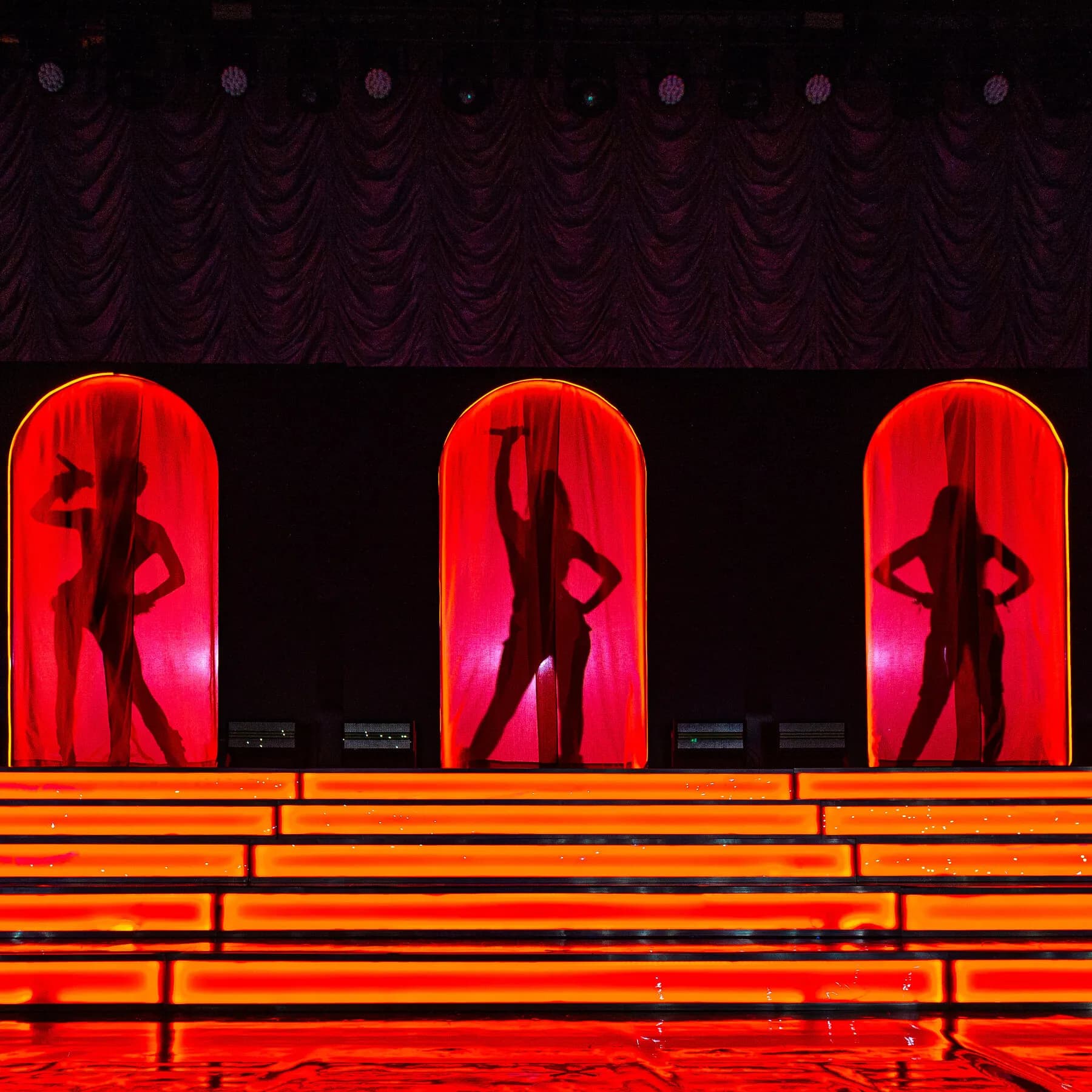
The Mic Is On. So Is Live Auto-Tune.
Discover how live Auto-Tune and real-time pitch correction technology are transforming modern concert vocal performances and live sound DSP signal chains.
Researched and edited by Kiran Ch and the WhatIsFuture editorial team. Reviewed for factual accuracy before publication.
When an arena singer stepped to the microphone a decade ago, the live audio signal chain was relatively straightforward: dynamic capsule to analog preamp, through channel strip equalization, dynamic range compression, delay, reverb, and out to the front-of-house PA system. Today, that signal pathway is mediated by zero-latency digital signal processing (DSP) hardware running sophisticated pitch-correction algorithms designed to correct vocal missteps before sound waves reach the audience. A report from NYT Tech underscores how live pitch correction—once a localized studio effect or an overt stylistic choice—has quietly transformed into standard infrastructure across modern live music productions.
Driven by an era where every concert moment is recorded in 4K resolution on smartphones and broadcast across social platforms within seconds, live vocal performance faces an uncompromising mandate for pitch perfection. The acoustic reality of stadium environments—massive sound pressure levels, complex stage monitoring acoustic feedback, high physical exertion, and dynamic choreography—makes flawless unassisted vocal pitch mathematically improbable across a two-hour set. As NYT Tech highlights, live pitch correction software, once branded as a crutch or an artistic artifact, has seamlessly woven itself into the live sound reinforcement rack. For technology executives, software architects, and audio DSP engineers, this shift marks a significant milestone in edge computing: real-time, low-latency machine steering of live human performance.
Join Our Tech Community
Get instant alerts on the most critical AI breakthroughs on our WhatsApp channel. No spam, just signal.
Key Takeaways
- Invisible Infrastructure Shift: Pitch correction has evolved from an overt vocal effect (pioneered by Cher and T-Pain) into low-latency, transparent live sound reinforcement software deployed seamlessly in high-profile concerts.
- Sub-Millisecond Latency Engineering: Modern live pitch steering relies on ultra-low-latency FPGA and DSP hardware capable of processing audio frames within a 1.5ms to 3ms round-trip window to prevent phase cancellation and acoustic comb filtering in stage monitors.
- ML-Enhanced Real-Time Tracking: Legacy pitch detection based purely on autocorrelation algorithms is giving way to hybrid machine learning models trained on vast dynamic vocal datasets to predict pitch drift and correct formants dynamically without artificial artifacts.
- Expectation Infrastructure: High-definition streaming and algorithmic media consumption have elevated consumer tolerance for pitch flaws to near zero, forcing live performance infrastructure to mirrors studio-mastered audio fidelity.
What Happened?
According to reporting published by NYT Tech, the adoption of live pitch correction software across touring productions has reached unprecedented levels. Historically, concertgoers understood that live performances carried inherent variations: microtonal pitch drifts, vocal strain, and breathiness were accepted as authentic markers of live musicianship. However, over the last five years, the live music economy has undergone a structural realignment. Ticket prices for stadium tours have escalated dramatically, pushing consumer expectations toward studio-grade acoustic execution. Simultaneously, short-form mobile video platforms have turned every venue into a recording studio, where a single off-key note can go viral, altering public perception and artist branding overnight.
To mitigate these risks, live sound engineers have quietly integrated automated pitch-steering systems directly into the primary vocal signal chains. Unlike backing tracks or lip-syncing—which rely on pre-recorded playback and strip the artist of dynamic live delivery—live pitch correction processes the vocalist’s real-time physical performance. The singer’s microphone captures their actual vocal output, but before that signal reaches the front-of-house amplifiers or in-ear monitors (IEMs), software calculates the target musical pitch and shifts the fundamental frequency ($F_0$) to the nearest scale degree instantly.
This technical shift has created an architectural bridge between fully authentic live singing and synchronized lip-syncing. Audio technicians can tune the system's retune speed dynamically: setting it to instant for stylized hyper-pop effects, or backing it off to a subtle 20-to-40 millisecond response time for transparent, imperceptible pitch stabilization. The result is a hybrid live performance where the physical voice provides the expressive dynamics, timbre, and emotional phrasing, while real-time algorithms enforce exact harmonic alignment with the band's instrumentation.
The Technology Behind It
Executing pitch correction on recorded audio inside a Digital Audio Workstation (DAW) is a solved computational problem. Non-real-time algorithms can analyze future audio frames (lookahead processing), calculate complex Fast Fourier Transforms (FFT), isolate the vocal fundamental frequency, and shift pitch using phase vocoders without time compression or formant distortion. Doing this in a live concert environment, however, introduces severe technical constraints that push audio signal processing to its theoretical limits.
The primary constraint in live vocal processing is total system round-trip latency. When a singer sings, sound travels through bone conduction directly to their inner ear. If the processed signal returning to their in-ear monitors (IEMs) is delayed by more than 5 milliseconds, the phase difference between bone conduction and acoustic playback creates comb filtering, localized disorientation, and severe pitching errors for the performer. Consequently, live pitch correction engines must complete pitch detection, scale quantization, formant retention, and audio resynthesis within a strict latency window of 1 to 3 milliseconds.
"In live sound reinforcement, latency isn't just a computational metric—it is an acoustic physics boundary. If your DSP frame buffer exceeds 64 samples at 96kHz, you introduce phase anomalies that degrade the vocalist's auditory feedback loop."
To achieve this speed, live pitch engines bypass standard operating system kernel drivers (such as Windows WASAPI or macOS CoreAudio) and run on dedicated Hardware DSP platforms—such as Waves SoundGrid, Universal Audio Apollo UAD-2 DSP, or custom FPGA hardware arrays built directly into digital mixing consoles (such as DiGiCo, Solid State Logic, or Avid VENUE systems). These systems process audio using specialized signal chains:
- Time-Domain Autocorrelation & Pitch Detection: Rather than relying on computationally heavy frequency-domain FFTs, live pitch detectors frequently deploy modified YIN or PYIN algorithms operating directly on time-domain waveforms. By analyzing periodic cycle repetitions in real-time, the algorithm isolates the fundamental frequency ($F_0$) with low computational overhead.
- Formant Shifting and Spectral Envelope Maintenance: Simply speeding up or slowing down an audio period alters the spectral envelope, causing the infamous "chipmunk effect" when shifting pitch upward. Modern live processors split the incoming vocal into its fundamental frequency and its vocal-tract resonance envelopes (formants). The fundamental is shifted to match the targeted MIDI or scale key, while the spectral envelope is locked to preserve natural human vocal timbre.
- Real-Time Neural Inference: Next-generation live pitch processors are replacing classical heuristic DSP with quantized neural network models running on dedicated edge neural processing units (NPUs). These neural models are trained on continuous vocal dynamics, enabling the software to distinguish between intentional vocal pitch bends (like blues slides or vibrato) and unintentional pitch drift, dynamically adjusting correction strength on a microsecond basis.
Engineers tackling complex latency and performance bounds in low-level software environments often draw parallels to enterprise software optimization, where real-time execution leaves no room for unpredicted GC pauses or thread contention. Techniques deployed in real-time DSP mirrors structural optimization principles observed when evaluating models on real-world systems, as explored in our deep-dive on benchmarking AI models on private enterprise codebases.
Why It Matters & Industry Impact
The widespread adoption of live pitch correction carries profound economic and technical implications across the entertainment, hardware, and software software sectors.
For live sound hardware manufacturers and software plugin developers, real-time vocal processing represents a high-margin growth vertical. Legacy studio processing companies like Antares Technologies (creators of Auto-Tune), Waves Audio, Eventide, and Synchro Arts have pivoted aggressively toward live DSP integration. Console manufacturers are competing on processing power, offering onboard low-latency processing slots directly within mixer channels to eliminate external outboard processing hardware.
From an enterprise and talent management perspective, live pitch steering operates as financial insurance. Modern stadium productions carry massive overhead costs—ranging from multi-million-dollar lighting setups to extensive logistics and crew payrolls. A single voice failure or bad viral vocal performance can damage an artist's brand equity and live touring revenues. Live pitch correction mitigates this downside risk, stabilizing live performances regardless of physical exhaustion, tour sickness, or demanding stage choreography.
However, this reliance on algorithmic intervention creates an interesting cultural and engineering tension. As live tools blur the line between organic human output and computer-assisted precision, audiences are left renegotiating what constitutes an authentic live experience. This dynamic reflects broader cultural discussions around automation and synthetic substitution, similar to the societal debates tracked in our coverage of the broader revolt against artificial mediation in modern media.
What Experts & Sources Say
Industry insiders, front-of-house (FOH) mix engineers, and acoustic researchers interviewed across live audio trade forums and primary industry sources emphasize that live pitch correction is no longer considered a hidden secret—it is standard audio engineering practice.
Prominent front-of-house mix engineers note that pitch correction software operates much like automated dynamic equalization or multi-band compression: a corrective tool designed to combat acoustic physics. In high-volume stadium setups, sub-bass rumble and stage spill bleed into vocal microphones, masking subtle pitch cues for singers on stage. Pitch steering acts as an invisible safety net that keeps vocals locked into the harmonic center of the arrangement.
Conversely, vocal coaches and traditionalists express concern over long-term voice health and performance mechanics. When singers rely on real-time pitch correction in their in-ear mixes, they may alter their natural breath control and vocal tract placement, leaning into the algorithm rather than maintaining internal pitch reference discipline. DSP architects counter that modern algorithms can be calibrated with variable tolerance zones, allowing natural human expressive variation while capping extreme pitch deviations.
What Happens Next?
Over the next 6 to 12 months, the architecture of live pitch processing will undergo a dramatic shift driven by two primary technical developments: generative AI neural vocoders running at zero latency and dynamic multi-stem correction.
- Predictive Neural Vocal Steering: Current systems react to pitch drift after the cycle is detected. Emerging neural DSP models will utilize predictive recurrent architectures (such as real-time transformers or quantized RNNs) to predict vocal pitch trajectory up to 50 milliseconds in advance, based on diaphragm pressure modulation and spectral dynamics captured by specialized sensor microphones.
- Dynamic Multi-Stem Phase Alignment: Pitch correction will expand beyond the primary lead microphone. Live sound engines will process multi-microphone setups simultaneously—such as backing vocalists and acoustic instrument mics—dynamically steering harmony groups in real-time to prevent microtonal phase cancellation across the entire front-of-house mix.
- Edge-NPU Hardware Integration: Digital mixing console manufacturers will increasingly embed specialized NPU silicon (such as Apple Neural Engine arrays or custom RISC-V ML accelerators) directly into console channel strips, democratizing zero-latency AI vocal steering for mid-tier venues and touring acts.
As startup founders and hardware developers build tools for this expanding market, establishing scalable operational execution strategies becomes essential. Hardware-software integration strategies in the live tech space match broader technical scaling frameworks discussed on the Builders Stage for scaling tech startups.
Bigger Picture
The ubiquity of live pitch correction is emblematic of a broader technological shift: the continuous algorithmic enhancement of real-world human telemetry. We are moving away from an era where technology acts as an explicit post-production filter toward an era of real-time algorithmic mediation of reality itself.
Just as low-latency neural video filters enhance live video feeds, spatial audio engines reshape room acoustics, and real-time machine translation buffers spoken language, live vocal pitch correction demonstrates that live human execution is increasingly filtered through continuous machine optimization before reaching human perception. In sound engineering, the line between hardware augmentation and physical reality has permanently dissolved—the microphone is on, the computer is listening, and the output is mathematically perfect.
Frequently Asked Questions
How does live pitch correction differ from studio Auto-Tune?
Studio pitch correction operates in non-real-time environments within a Digital Audio Workstation (DAW). It uses lookahead algorithms, high-resolution Fast Fourier Transforms (FFT), and multi-pass dynamic analysis to adjust pitch and formants with zero latency constraints. Live pitch correction must operate under strict sub-3-millisecond processing buffers using fast time-domain autocorrelation algorithms and optimized hardware DSPs to prevent acoustic feedback and phase comb-filtering in the performer's in-ear monitors.
Does live pitch correction mean an artist isn't actually singing?
No. Live pitch correction requires a real vocal signal to function. The singer provides the fundamental voice, emotional dynamics, phrasing, timbre, and lyrics in real time. The software acts as an automated frequency filter that nudges microtonal pitch variations to the target scale note. It differs fundamentally from lip-syncing or backing tracks, where the live vocal is muted in favor of pre-recorded media.
Can audiences tell when live Auto-Tune is being used?
When configured as a protective safety net, modern live pitch correction is completely transparent to human hearing. Engineers adjust retune speeds to smooth out gradual pitch drift without removing natural vocal vibrato or micro-slides. The recognizable, stylized "Auto-Tune effect" only occurs when retune speed parameters are intentionally set to zero milliseconds, forcing instantaneous step-wise pitch quantization.
This analysis was inspired by a story originally reported by NYT Tech. Read the original report →
Supercharge Your Workflow with Claude AI
The AI assistant used by professionals worldwide. Write, code, analyse — all in one place.