Why California Is Reconsidering Its Decision to Shun Nuclear Power
The state is considering extending the life of its last nuclear power plant, Diablo Canyon, and allowing construction of new reactors to help meet its clean energy goals.
Researched and edited by Kiran Ch and the WhatIsFuture editorial team. Reviewed for factual accuracy before publication.
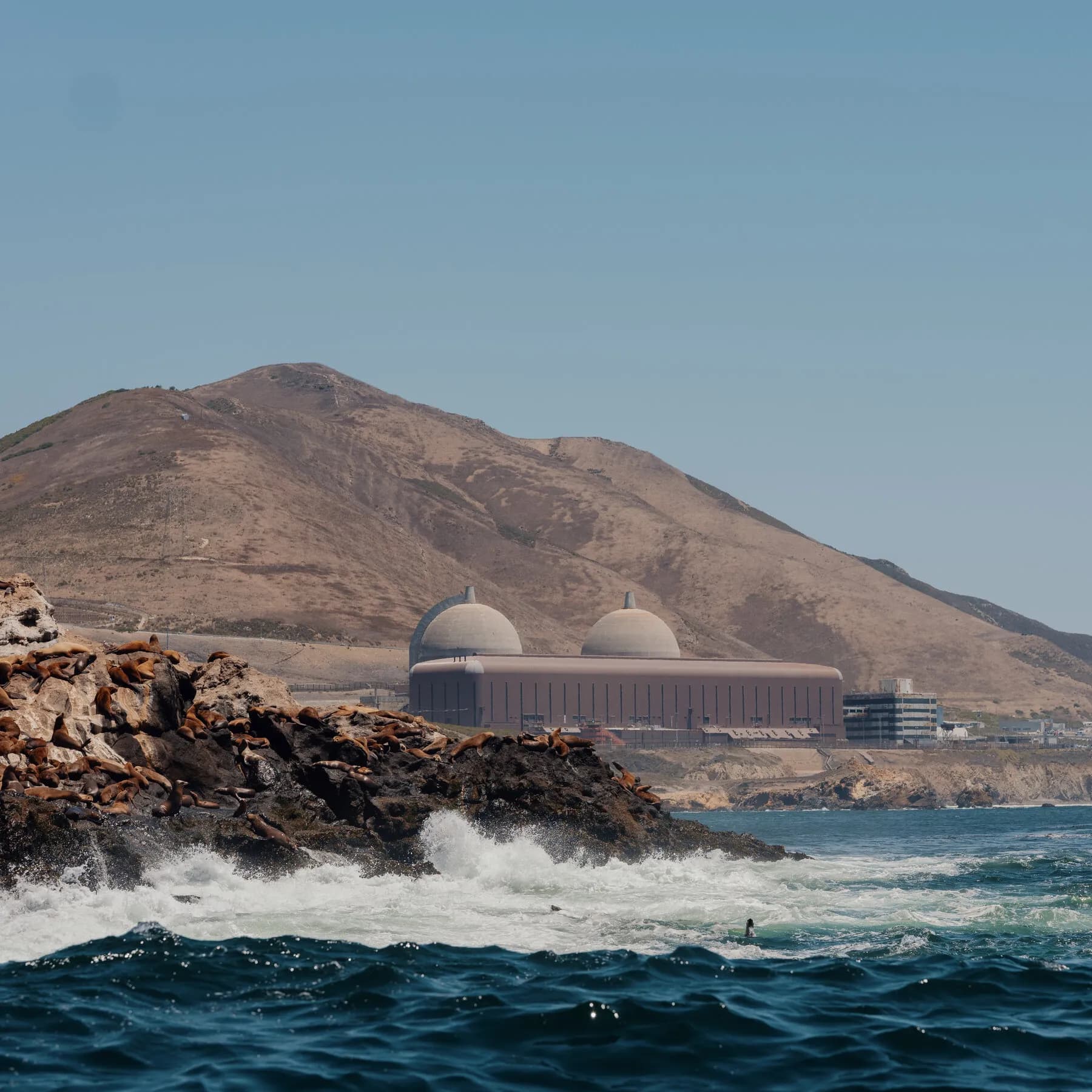
California’s decades-long stance against nuclear power is crumbling under the immense, unrelenting weight of the state's modern energy crisis. As reported by NYT Tech, state officials are actively pivoting away from plans to decommission Diablo Canyon—California's final operational nuclear facility—and are evaluating regulatory pathways to permit the construction of next-generation nuclear reactors. This sea change reflects a sobering policy reality: California cannot meet its aggressive statutory mandate of 100 percent clean energy by 2045 while simultaneously absorbing the explosive power demands of artificial intelligence clusters, hyperscale data centers, and sweeping grid electrification.
For decades, California served as the ideological birthplace and policy epicenter of the anti-nuclear movement, enforcing strict moratoriums on new reactor construction until federal repositories for spent fuel were finalized. However, the physical reality of electrical grid management has reasserted itself. Between recurring summer heatwaves that strain the California Independent System Operator (CAISO) balancing authority and unprecedented megawatt-scale demand spikes driven by frontier AI training runs, intermittent renewables like solar and wind have proved insufficient on their own. The state's political calculus has fundamentally shifted: zero-carbon, high-capacity-factor baseload power is no longer viewed as an environmental liability, but as an operational requirement for technological and economic survival.
Join Our Tech Community
Get instant alerts on the most critical AI breakthroughs on our WhatsApp channel. No spam, just signal.
Key Takeaways
- Life Extension for Diablo Canyon: California state agencies and Pacific Gas & Electric (PG&E) are finalizing measures to extend the operational lifetime of the 2,256-megawatt Diablo Canyon nuclear plant well past its previously mandated retirement timeline.
- Reassessment of the Construction Moratorium: Lawmakers are re-evaluating the 1976 Warren-Alquist Act's ban on new nuclear construction, paving the way for Small Modular Reactors (SMRs) and advanced nuclear tech to be deployed in-state.
- The AI Energy Demand Crunch: The exponential growth of compute density in AI data centers has created an urgent need for 24/7, high-uptime, zero-carbon "firm power" that intermittent solar and wind generation cannot reliably deliver.
- A Nationwide Paradigm Shift: California's pivot aligns with a broader tech industry push—led by hyperscalers like Microsoft, Google, and Amazon—to procure dedicated nuclear generation for next-generation compute infrastructure.
What Happened?
The trajectory of nuclear power in California was supposedly sealed in 2016. Under a high-profile agreement between PG&E, environmental groups, and labor unions, the state scheduled the complete phase-out of Diablo Canyon’s two pressurized water reactors by 2024 and 2025. The operating assumption at the time was straightforward: rapid buildouts of utility-scale solar, wind, and battery storage would seamlessly backfill the lost generation without increasing reliance on natural gas plants.
That assumption failed when confronted with grid physics and changing economic dynamics. Severe heatwaves in recent years forced CAISO to issue emergency Flex Alerts to avoid rolling blackouts, highlighting critical gaps in the grid’s net-peak capacity—the hours just after sunset when solar output plunges but residential and commercial cooling demands remain high. Recognizing the risk, the California Legislature passed Senate Bill 846 in 2022, approving a $1.4 billion forgivable loan to extend Diablo Canyon’s operations through 2030. According to recent reporting from NYT Tech, that temporary extension has evolved into a long-term policy overhaul.
State regulators, energy planners, and legislators are now laying the groundwork to maintain Diablo Canyon for decades to come, while simultaneously re-examining the state's historical bans on building new nuclear reactors. The driving forces behind this reversal are twofold: California's legally binding mandate under SB 100 to achieve a 100 percent carbon-free electricity grid by 2045, and the massive, localized load increases projected from the tech sector. With artificial intelligence models demanding orders of magnitude more compute, energy demands from data centers in Northern and Central California are growing faster than state utilities can interconnect traditional renewable and battery systems.
The Technology Behind It
Understanding California's pivot requires examining both the engineering mechanics of legacy nuclear facilities and the technical distinctions offered by next-generation advanced nuclear reactors.
Diablo Canyon operates two Westinghouse-designed Pressurized Water Reactors (PWRs). In a PWR system, the nuclear reactor core heats water under extreme pressure to prevent it from boiling. This primary loop water is pumped to steam generators, where it transfers heat to a secondary water loop, creating steam that drives turbine generators to produce electricity. Because nuclear fission relies on the steady, controlled decay of enriched uranium-235 fuel rods, a facility like Diablo Canyon operates with a capacity factor exceeding 90 percent. This means it generates full rated output continuously, independent of ambient weather conditions, time of day, or atmospheric visibility.
By contrast, California’s clean energy stack relies heavily on solar photovoltaics (PV). While solar has expanded dramatically across the Central Valley and Mojave Desert, it introduces the notorious "duck curve" into grid operations. During mid-day hours, solar overproduction can drive wholesale electricity prices negative. However, as the sun sets, solar generation drops to zero over a 60-to-90-minute window. To compensate, grid operators must ramp up thousands of megawatts of fast-responding capacity. While utility-scale lithium-ion battery energy storage systems (BESS) help bridge this gap, current four-hour duration batteries cannot sustain long-duration grid shortfalls caused by multi-day weather events, atmospheric blockages, or seasonal drops in winter solar radiation.
"Solar and batteries are vital, but grid architecture requires a firm structural backbone. You cannot run a high-availability power grid—or multi-gigawatt AI training operations—solely on weather-dependent resources and short-duration chemical storage."
This technical limitation is driving interest in Small Modular Reactors (SMRs) and Advanced Modular Reactors (AMRs). Unlike traditional gigawatt-scale plants that require customized civil engineering and decades of capital investment, SMRs are designed to produce between 50 and 300 megawatts per module and can be factory-fabricated and transported by rail or barge. Many SMR designs leverage advanced coolant systems—such as high-temperature gas, liquid sodium, or molten fluoride salt—operating at near-atmospheric pressures. These passive safety systems eliminate the need for external emergency power or continuous active liquid pumping to prevent core meltdowns in off-nominal events, drastically reducing both spatial footprint and emergency planning zone requirements.
Why It Matters & Industry Impact
For the technology sector, California’s nuclear reconsideration directly addresses the primary bottleneck facing the next decade of digital infrastructure: power access. As the race toward scale intensifies, compute power requirements are outstripping power grid capacity. As energy constraints dictate the pace at which superintelligence is coming, hyper-scalers are forced to secure firm, carbon-free energy contracts years before facilities break ground.
The impact spans multiple core domains of the technology ecosystem:
- AI Infrastructure & Data Center Operators: Frontier AI models require continuous power for training clusters that run 24/7 for months at a time. Intermittent grid power or high carbon intensity conflicts with corporate sustainability commitments. Firm nuclear energy provides the baseload continuous profile necessary to run high-density GPU racks at maximum capacity without reliance on fossil-fuel peaker plants.
- Semiconductor Fabrication and Advanced Hardware: Semiconductor foundries operating in Western states require ultra-reliable, uninterrupted electricity. Micro-fluctuations or millisecond voltage drops can spoil entire wafers, costing millions of dollars per incident. High-uptime baseload power protects critical supply chains.
- Grid-Edge Engineering and Power Architecture: Modern grid design is moving toward hybrid architectures. Integrating nuclear power alongside software-driven energy orchestrations—such as balancing local demands by joining virtual power plants and distributed battery storage—allows utilities to mitigate peak loads while maintaining baseline reliability.
- Venture Capital & Energy Startups: Policy shifts in California clear a path for capital infusion into advanced nuclear startups. Companies building novel cooling systems, fuel configurations (such as High-Assay Low-Enriched Uranium, or HALEU), and micro-reactors are seeing increased valuation multiples and interest from enterprise tech balance sheets.
What Experts & Sources Say
Industry analysts, grid reliability engineers, and public policy researchers view California's nuclear pivot as a necessary pragmatic adjustment to aggressive climate and tech-economy objectives.
Energy economists point out that the cost-benefit analysis of retiring Diablo Canyon shifted dramatically post-2020. Early decommissioning models underestimated both the rate of load growth from electric vehicle adoption and the compute-density demands of enterprise AI workloads. Nuclear safety engineers emphasize that Diablo Canyon has undergone rigorous seismic retrofits and safety upgrades following the Fukushima Daiichi incident, making its continued operation technically sound according to Nuclear Regulatory Commission (NRC) benchmarks.
Conversely, non-proliferation advocates and traditional environmental groups continue to voice concerns regarding spent nuclear fuel management. With no permanent federal repository operational in the United States, spent fuel assemblies must remain stored on-site in concrete and steel dry casks. Critics argue that extending Diablo Canyon’s operating license perpetuates on-site storage risks along an active coastal zone. However, state energy officials counter that the operational risk of nuclear spent fuel storage is vastly outweighed by the immediate economic and environmental risks of systemic rolling blackouts or returning to coal and natural gas generation to avoid grid failure.
What Happens Next?
Over the next 6 to 12 months, several key legislative, regulatory, and technical milestones will determine the trajectory of California's nuclear infrastructure:
First, PG&E will continue navigating the complex licensing process with the federal Nuclear Regulatory Commission (NRC) to formalize Diablo Canyon’s 20-year license renewal. Simultaneously, the state's Department of Water Resources and the California Public Utilities Commission (CPUC) will finalize financial cost-recovery mechanisms to ensure the facility's operational costs remain equitable for state ratepayers.
Second, state legislators are expected to debate explicit statutory modifications to the 1976 Warren-Alquist Act during upcoming legislative sessions. Draft proposals aim to carve out explicit exemptions for SMRs and advanced nuclear technologies, classifying them separately from legacy high-capacity light-water reactors.
Third, hyperscalers will likely enter direct negotiations with energy developers to establish co-located power purchase agreements (PPAs) in California. As seen across the broader technology ecosystem—where intense competitive pressure is defining the ongoing AI deployment wars—securing long-term clean power capacity is no longer just a facility management detail; it is a primary strategic advantage.
Bigger Picture
California’s policy reversal is not an isolated event; it is part of a structural global shift in how technology and energy policy intersect. For decades, energy strategy and technology infrastructure operated in relative silos. Today, high-density compute, electrification, and grid capacity have fused them into a single domain.
Globally, we are witnessing a broader nuclear revival driven by tech capital. Constellation Energy recently announced plans to restart Unit 1 of the Three Mile Island nuclear facility under a 20-year power purchase agreement dedicated exclusively to Microsoft data centers. Amazon Web Services acquired a nuclear-powered data center campus from Talen Energy adjacent to the Susquehanna Steam Electric Station. Google has partnered directly with Kairos Power to deploy a fleet of small modular reactors by 2030.
When California—historically the world's most prominent anti-nuclear policy environment—begins dismantling its own barriers, it signals that the global transition to advanced nuclear energy is accelerating. As software continues to automate complex physical infrastructure and AI models push power demands higher, high-density, zero-carbon nuclear energy is stepping up as an essential foundation of modern compute capacity.
Frequently Asked Questions
Why was Diablo Canyon originally scheduled for shutdown, and why did California change its mind?
Diablo Canyon was slated for retirement under a 2016 agreement due to high operating costs, seismic safety concerns, local environmental opposition, and the assumption that renewable resources like solar and wind could easily replace its output. California reversed course after severe heatwaves strained the electrical grid, revealing that intermittent renewables and battery storage could not reliably cover net-peak demands without creating blackout risks or forcing reliance on fossil fuels, especially as AI and electrification rapidly drive up total energy demands.
What are Small Modular Reactors (SMRs), and how do they differ from Diablo Canyon?
Small Modular Reactors (SMRs) are advanced nuclear reactors that generate up to 300 megawatts per module—roughly one-third or less of the capacity of traditional reactors like Diablo Canyon. SMRs feature standardized, factory-fabricated designs that can be shipped by truck or rail, lowering capital costs and deployment timelines. Many SMR designs also use advanced coolants (such as liquid metal or molten salt) and passive safety systems that shut down automatically without operator intervention or external power in emergency scenarios.
Can new nuclear reactors be built fast enough to solve California's current power constraints?
While building brand-new traditional nuclear plants requires 10 to 15 years, extending Diablo Canyon provides immediate baseline power relief over the next decade. Meanwhile, regulatory changes permitting SMRs pave the way for faster deployments in the early 2030s. SMRs feature modular, streamlined construction timelines compared to legacy facilities, making them a viable medium-to-long-term solution to support the explosive energy growth of California's tech industry and clean energy targets.
This analysis was inspired by a story originally reported by NYT Tech. Read the original report →
Supercharge Your Workflow with Claude AI
The AI assistant used by professionals worldwide. Write, code, analyse — all in one place.